EN


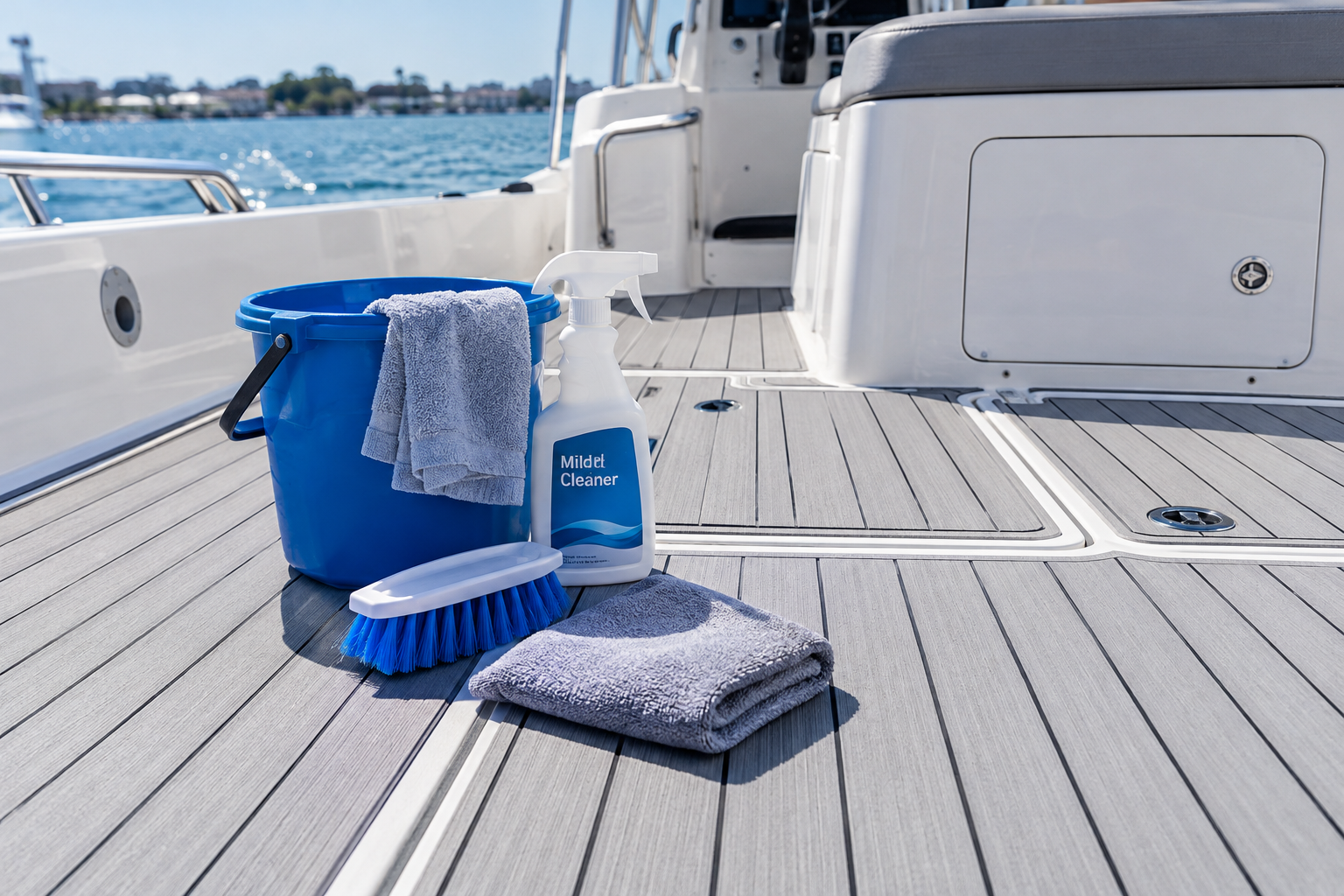
EVA boat flooring is designed to make life on the water more comfortable, but keeping it looking good takes more than an occasional rinse.
Salt residue, sunscreen, spilled drinks, muddy footprints, and prolonged exposure to sunlight can all affect the appearance of your boat deck. Without proper care, dirt may build up in textured surfaces, while neglected edges and seams can become harder to inspect and maintain.
The good news? Maintaining EVA boat flooring doesn't have to be complicated. With the right cleaning methods, a few simple habits, and regular inspections, you can help keep your marine decking clean and in good condition throughout the boating season.
Whether you're a boat owner, a marine repair professional, or a business working with EVA marine flooring, this guide covers the practical steps that matter most.
1. Why Does EVA Boat Flooring Need Regular Maintenance?
EVA foam flooring is popular in marine applications because it offers a cushioned surface, customizable designs, and a comfortable feel underfoot.
However, boat decks are exposed to a demanding environment. Saltwater, UV exposure, changing temperatures, moisture, and everyday use can gradually affect the appearance and condition of the flooring.
Common maintenance challenges include:
Salt and mineral residue: Dried water droplets may leave marks on the surface.
Sunscreen and oil: These substances can leave slippery or difficult-to-remove residue.
Sand and dirt: Particles may collect in textured patterns and seams.
Organic debris: Leaves and other plant material can leave stains if neglected.
Moisture and poor ventilation: Prolonged damp conditions may contribute to an unfavorable storage environment.
Adhesive problems: Lifting edges or separating seams may indicate an installation, bonding, substrate, or environmental issue.
Understanding these challenges makes it easier to choose the right maintenance approach instead of treating every problem with the same cleaning method.
2. How Often Should You Clean EVA Boat Flooring?
There is no universal cleaning schedule for every boat. The appropriate frequency depends on how often you use your boat, the surrounding environment, and the flooring manufacturer's recommendations.
A practical maintenance routine includes three levels of care.
After boating: Remove surface contaminants
After using your boat, especially in saltwater, rinse the deck with fresh water when practical.
Remove loose sand, mud, and other debris before they accumulate in the surface texture. If you notice sunscreen, food, or drink spills, clean the affected area promptly using a compatible cleaner.
You don't necessarily need an intensive cleaning session after every trip. The goal is to prevent common contaminants from building up.
During regular use: Clean when needed
Inspect areas that receive frequent foot traffic, such as entry points, seating areas, fishing stations, and swim platforms.
If dirt begins to accumulate, clean the affected sections rather than waiting until the entire deck looks dirty.
Before long-term storage: Clean and inspect
Before storing your boat for an extended period, remove dirt and organic debris, rinse away cleaning residue, and allow the deck to dry as thoroughly as practical.
This is also a good opportunity to inspect edges, seams, and visibly damaged areas.
The key principle is simple: remove contaminants early, clean according to actual conditions, and avoid unnecessary aggressive treatment.
3. How to Clean EVA Boat Flooring Without Damaging It
For routine cleaning, a simple method is often sufficient.
Step 1: Remove loose dirt
Use a soft brush to sweep away sand, leaves, and other debris.
Pay attention to textured grooves and corners where particles can collect.
Step 2: Use a compatible cleaning solution
Mix mild soap with fresh water, or use a cleaner specifically approved for your EVA flooring.
Avoid assuming that a product suitable for fiberglass, metal, or another hard surface is automatically safe for EVA foam and its adhesive system.
Step 3: Gently scrub the surface
Use a suitable soft- or medium-bristle brush, following the flooring manufacturer's instructions.
Work on heavily soiled areas without applying excessive force. Abrasive pads and stiff metal brushes may damage the surface texture.
Step 4: Rinse thoroughly
Remove loosened dirt and cleaning residue with fresh water.
Leaving soap or cleaner on the deck may affect its appearance or attract additional dirt.
Step 5: Allow the flooring to dry
Let the surface dry before covering the boat or placing equipment on the deck.
If moisture repeatedly accumulates in certain areas, check the surrounding drainage and ventilation conditions.
For unfamiliar cleaning products, follow the manufacturer's instructions and test them on a small, inconspicuous area when appropriate.
4. How to Remove Common Stains from EVA Marine Flooring
Not every stain requires the same treatment. Identifying the source of the contamination can help you choose a more suitable cleaning method.
Sunscreen and oily residue
Sunscreen, body oils, and similar substances can leave marks on marine decking, particularly in areas where people frequently sit or walk barefoot.
Start by removing excess residue with a suitable absorbent material. Then clean the affected area using mild soap and water or a compatible cleaner.
Avoid immediately reaching for strong solvents or aggressive degreasers. These products may affect the foam, surface finish, or adhesive system.
Saltwater marks
Salt residue can accumulate after repeated exposure to seawater and evaporation.
Rinse the surface with fresh water and gently clean any remaining marks. Regular rinsing can help prevent residue from building up.
Mud, sand, and dirt
Allow loose particles to be removed before scrubbing. This reduces the chance of grinding abrasive particles into the surface.
Use a suitable brush to clean textured areas, then rinse thoroughly.
Food, drinks, and organic stains
Clean spills as soon as practical. Organic material left on the deck for an extended period may become more difficult to remove.
For stubborn stains, consult the flooring manufacturer's cleaning recommendations before using a stronger product.
Avoid mixing cleaning chemicals, and never assume that bleach or another harsh cleaner is safe for your particular flooring.
5. How to Protect EVA Boat Flooring from Sunlight and Heat
For any marine flooring installed outdoors, sunlight is a critical factor to consider—particularly the phenomenon of "light magnification," which can easily cause damage to the flooring.
Some EVA marine flooring products are specifically designed and tested for UV resistance; however, their actual performance may vary based on their formulation, color, exposure environment, and product specifications.
Even when flooring has UV-resistant properties, appropriate care remains important.
Here are several practical measures:
Use suitable boat covers: When practical, reduce prolonged direct exposure by using a cover designed for your boat.
Maintain ventilation: Avoid trapping moisture beneath a poorly ventilated cover.
Clean during suitable conditions: Avoid allowing cleaning solutions to dry on a hot surface. Follow the cleaner manufacturer's instructions.
Monitor changes in appearance: Periodically check for unusual discoloration, surface deterioration, or other visible changes.
Follow product-specific guidance: Confirm the manufacturer's recommendations for temperature exposure and cleaning.
A boat cover can help reduce direct sunlight exposure, but it should not create a damp, poorly ventilated environment.
For boat owners in tropical climates, where strong sunlight and high humidity may occur throughout the year, these considerations are particularly relevant.
6. How to Prevent EVA Boat Flooring from Peeling
One concern among boat owners is whether EVA flooring will lift at the edges or separate from the deck.
It's important to understand that peeling does not always have the same cause. Possible contributing factors include improper surface preparation, unsuitable adhesive, installation conditions, moisture, substrate contamination, or environmental exposure.
The following practices can help you identify problems early.
Inspect edges and seams regularly
Look for edges that have started to lift, gaps between adjoining sections, or areas where the flooring appears loose.
Pay particular attention to sections exposed to frequent foot traffic, water, or repeated contact with equipment.
Keep the underlying area in good condition
If you notice lifting, investigate the surrounding area for possible contamination, moisture, or substrate problems.
Simply pressing the flooring back into place may not address the underlying cause.
Avoid unapproved repair methods
Do not automatically apply a household adhesive or strong solvent to repair loose EVA flooring.
The repair method should be compatible with the foam, backing adhesive, and boat deck material.
If the affected area is extensive or the cause is unclear, consult the flooring supplier or a qualified marine flooring professional.
Regular inspection is more useful than waiting until a small area of lifting becomes a larger problem.
7. How to Store a Boat with EVA Marine Decking
If your boat will not be used for several weeks or months, proper storage becomes part of your flooring maintenance routine.
The most important considerations are cleanliness, moisture management, and protection from environmental exposure.
Before storage:
Remove sand, mud, leaves, salt residue, and other contaminants.
Clean the flooring with a compatible cleaning solution.
Rinse thoroughly to remove cleaning residue.
Allow the deck to dry as thoroughly as practical.
Inspect the edges and seams for visible damage.
Cover the boat appropriately while allowing suitable ventilation.
What if your boat is stored in winter?
Storage requirements depend on the local climate. Because EVA foam expands and contracts with temperature changes, the ideal storage temperature range is 4–70°F (4–21°C).
In cold regions, do not use sharp metal tools or rough methods to remove ice from EVA flooring. Furthermore, never use de-icing chemicals unless the flooring manufacturer has confirmed they are compatible.
In warm, humid regions, pay special attention to maintaining proper ventilation and preventing moisture from accumulating under the boat cover.
When preparing to use the boat again, inspect the flooring for any lifted edges, discoloration, or other visible changes before resuming normal use.
8. Common EVA Boat Flooring Maintenance Mistakes
Even a straightforward maintenance routine can become less effective if the wrong cleaning products or methods are used.
Here are five common mistakes to avoid.
Using unapproved chemicals: Strong solvents, aggressive degreasers, and unsuitable cleaners may affect the foam, surface finish, or adhesive.
Scrubbing too aggressively: Abrasive tools can damage the surface texture and appearance.
Ignoring spills: Sunscreen, oils, and organic debris may become harder to remove when left untreated.
Ignoring loose edges: Early inspection can help identify potential bonding or installation problems before they worsen.
Covering a wet deck for extended periods: Trapped moisture can create an unfavorable storage environment.
When in doubt, start with the least aggressive cleaning method recommended for your flooring and consult the manufacturer before trying a stronger treatment.
9. Choosing Quality EVA Marine Flooring for Easier Maintenance
Good maintenance begins with an appropriate product selection.
For boat owners, the right flooring should suit the intended application, installation surface, environmental conditions, and expected use.
For marine repair businesses, boat builders, and flooring distributors, material consistency and reliable specifications are also important when selecting a supplier.
Before purchasing EVA marine flooring, consider:
Material specifications: Check thickness, density or hardness specifications, and other relevant product details.
Surface design: Choose a texture and pattern appropriate for the intended application and cleaning requirements.
Adhesive compatibility: Confirm that the adhesive system is suitable for the intended substrate and installation conditions.
Environmental performance: Review relevant UV-resistance and other test data where applicable.
Supply options: Confirm available sheet dimensions, colors, thicknesses, and customization services.
A suitable product, correct installation, and consistent maintenance work together to support long-term performance.
YCDECK EVA Foam Sheets and Custom Boat Flooring Kits
YCDECK supplies EVA foam sheets and custom-cut EVA boat flooring kits for marine flooring projects.
Our product range serves businesses and customers looking for materials for marine flooring production, custom fabrication, and boat deck renovation.
For CNC processing companies and wholesale distributors, EVA foam sheets provide a starting material for developing customized flooring products and other suitable fabricated components.
For customers looking for boat-specific flooring, custom-cut kits offer another option based on the dimensions and layout of the vessel.
When evaluating products for your project, discuss the intended application, required dimensions, surface pattern, thickness, and installation conditions with your supplier.
Looking for EVA foam sheets or custom boat flooring for your next project? Contact YCDECK to discuss your requirements.
Final Thoughts
Maintaining EVA boat flooring doesn't require a complicated routine.
Remove dirt before it accumulates, deal with spills promptly, use compatible cleaning products, and inspect the edges and seams regularly. Before long-term storage, clean the deck and make sure moisture is not trapped beneath the cover.
These simple habits can help you keep your marine flooring looking clean and make it easier to identify potential problems early.
Whether you're caring for your own boat or sourcing materials for marine flooring production, understanding proper maintenance is an important part of choosing and using EVA decking.
Need EVA foam sheets or custom-cut boat flooring for your business or boat? Contact YCDECK to explore the available options.
Frequently Asked Questions
1. How often should I clean EVA boat flooring?
The frequency depends on how often you use your boat and the conditions it encounters. Rinse away salt and loose debris when practical, clean spills promptly, and perform a more thorough cleaning whenever dirt accumulates.
2. What is the best cleaner for EVA marine flooring?
Mild soap and water are a reasonable starting point for routine cleaning, provided they are compatible with your particular flooring. For specialized products or stubborn stains, follow the manufacturer's recommendations.
3. Can I pressure wash EVA boat flooring?
That depends on the product and the pressure washer settings. Excessive pressure or an unsuitable nozzle may damage the surface or affect adhesive-backed flooring. Check the manufacturer's instructions before pressure washing.
4. Does EVA boat flooring fade in sunlight?
Some products may change in appearance after prolonged UV exposure. The degree of change depends on the material formulation, color, exposure conditions, and product performance. Check the supplier's specifications and relevant test reports.
5. How can I prevent EVA boat flooring from peeling?
Proper surface preparation, compatible adhesive, suitable installation conditions, and regular inspection all matter. If an edge starts lifting, identify the cause before attempting a repair.
6. Can EVA marine decking be left outdoors year-round?
That depends on the product specifications and environmental conditions. UV exposure, moisture, temperature changes, and storage practices may influence long-term performance. Follow the manufacturer's recommendations for your particular flooring.
7. Can YCDECK supply EVA foam sheets for CNC processing businesses?
Yes. YCDECK supplies EVA foam sheets for CNC processing companies and wholesale distributors. Contact our team to discuss your required dimensions, thicknesses, colors, surface patterns, and order quantity.
Table of Contents
- 1. Why Does EVA Boat Flooring Need Regular Maintenance?
- 2. How Often Should You Clean EVA Boat Flooring?
- 3. How to Clean EVA Boat Flooring Without Damaging It
- 4. How to Remove Common Stains from EVA Marine Flooring
- 5. How to Protect EVA Boat Flooring from Sunlight and Heat
- 6. How to Prevent EVA Boat Flooring from Peeling
- 7. How to Store a Boat with EVA Marine Decking
- 8. Common EVA Boat Flooring Maintenance Mistakes
- 9. Choosing Quality EVA Marine Flooring for Easier Maintenance
- Final Thoughts
-
Frequently Asked Questions
- 1. How often should I clean EVA boat flooring?
- 2. What is the best cleaner for EVA marine flooring?
- 3. Can I pressure wash EVA boat flooring?
- 4. Does EVA boat flooring fade in sunlight?
- 5. How can I prevent EVA boat flooring from peeling?
- 6. Can EVA marine decking be left outdoors year-round?
- 7. Can YCDECK supply EVA foam sheets for CNC processing businesses?