EN
EN


The Hidden Costs of Low-Quality EVA Foam Sheets
When sourcing EVA foam sheets for marine flooring, many buyers focus primarily on price. At first glance, choosing a lower-cost material may seem like a smart way to increase profit margins or reduce production expenses. However, the reality is often quite different.
Low-quality EVA foam sheets can create hidden costs throughout the entire lifecycle of a project—from CNC machining and installation to customer satisfaction and warranty claims. In many cases, the cheapest sheet becomes the most expensive option.
This article explores the hidden costs associated with low-quality EVA foam sheets and explains why professional boat builders, fabricators, and distributors increasingly prioritize quality over price.
Why EVA Foam Quality Matters
EVA foam is more than just a decorative surface. In marine applications, it must withstand:
- Continuous UV exposure
- Saltwater and moisture
- Heavy foot traffic
- Temperature fluctuations
- Mechanical stress during installation and use
If the material quality is inconsistent, problems can appear long before the flooring reaches the customer.
1. Increased Material Waste During CNC Machining
One of the first hidden costs appears during production.
Low-quality EVA sheets often suffer from:
- Inconsistent density
- Uneven thickness
- Poor flatness
- Weak bonding between layers
These issues can cause CNC machines to produce:
- Rough edges
- Incomplete cuts
- Uneven engraving depths
- Dimensional inaccuracies
As a result, operators spend more time adjusting machine settings and replacing defective pieces.
- More wasted material
- Additional machine time
- Reduced production efficiency
- Higher labor costs
At YCDECK, every EVA foam sheet is manufactured with a thickness tolerance of 6mm ±0.2mm, helping fabricators achieve cleaner cuts and more consistent machining results.
2. Adhesive Failure Creates Expensive Rework
Many EVA flooring failures are not caused by the foam itself but by poor adhesive performance.
Low-cost EVA sheets often use inferior pressure-sensitive adhesives that struggle with:
- Heat exposure
- Moisture
- UV radiation
- Long-term bonding strength
The result is lifting edges, bubbling, and peeling.
- Product replacements
- Installation rework
- Customer complaints
- Shipping expenses
Professional installers understand that replacing a failed floor can cost far more than the original material savings.
YCDECK uses YC95+ Marine Adhesive, engineered for demanding marine environments and long-term durability.
3. Color Fading Damages Customer Satisfaction
Marine flooring spends years exposed to direct sunlight.
Low-grade EVA foam typically contains lower-quality pigments and UV stabilizers, causing:
- Premature fading
- Surface discoloration
- Uneven appearance
- Reduced aesthetic value
What looks good on delivery may look significantly different after a single season on the water.
- Reduced customer satisfaction
- Negative reviews
- Brand reputation damage
- Repeat warranty claims
YCDECK EVA foam sheets are SGS-tested for 3,000+ hours of UV resistance, helping maintain appearance and performance over time.
4. Thickness Variations Reduce Installation Quality
Thickness consistency directly impacts installation results.
Low-quality sheets frequently vary beyond acceptable tolerances.
This can lead to:
- Uneven deck surfaces
- Visible seams
- Poor edge alignment
- Difficult installation
Installers often spend extra time trimming, adjusting, and correcting these issues.
- Increased installation labor
- Delayed project completion
- Unsatisfied customers
Consistent thickness ensures a professional finished appearance and faster installation.
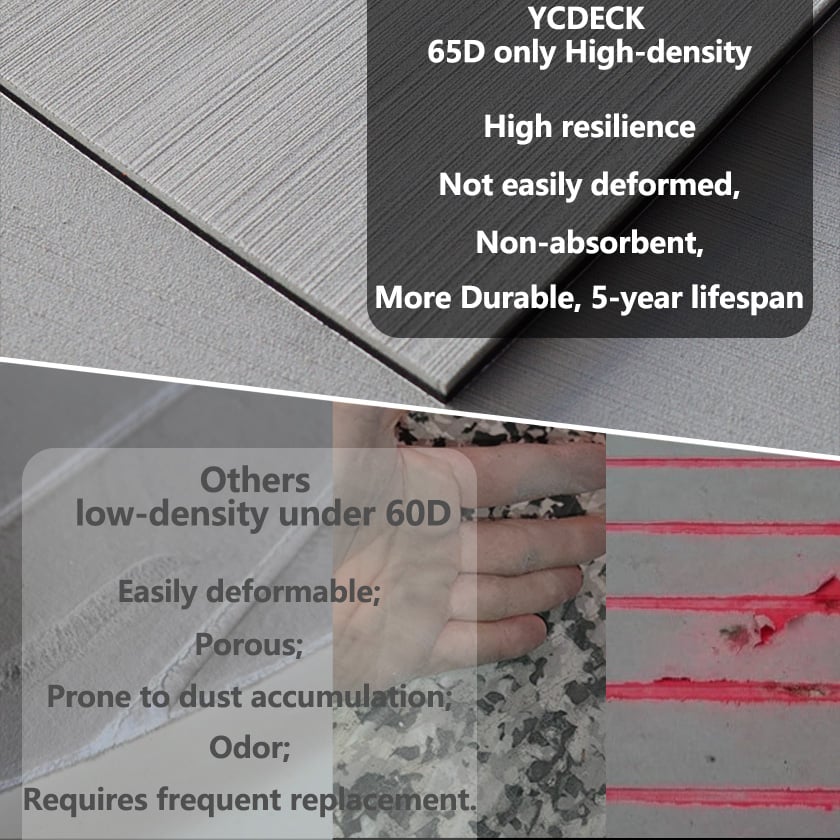
5. Lower Density Means Shorter Product Life
Density is one of the most important indicators of EVA foam quality.
Low-density foam tends to:
- Compress more easily
- Wear faster
- Lose texture
- Show permanent indentations
Although cheaper initially, it often requires replacement much sooner.
- Shorter service life
- More frequent replacements
- Lower customer confidence
YCDECK's 65D high-density EVA foam is designed to provide excellent durability, comfort, and long-term performance.
6. Higher Warranty and After-Sales Expenses
Every flooring issue creates costs that are rarely included in the purchase price.
These costs include:
- Customer support time
- Replacement materials
- Shipping costs
- Installation assistance
- Reputation management
For distributors and fabricators, a single flooring failure can erase the profit from multiple successful projects.
The true expense of low-quality EVA foam often appears months after installation, when customers begin reporting problems.
7. Lost Business Opportunities
Customers remember quality.
When a flooring project performs well, customers often return for additional orders and recommend the supplier to others.
When it fails, the opposite happens.
- Lost repeat customers
- Reduced referrals
- Lower distributor confidence
- Missed long-term revenue
In competitive marine markets, reputation is one of the most valuable assets a business can have.
Why Professionals Choose YCDECK EVA Foam Sheets
YCDECK focuses on producing premium EVA foam sheets designed specifically for marine flooring applications.
- 65D High-Density EVA Foam
- 6mm Thickness ±0.2mm Tolerance
- 120 × 240 cm Large Sheet Size
- SGS-Tested 3,000+ Hours UV Resistance
- YC95+ Marine-Grade Adhesive
- Excellent CNC Machining Performance
- Consistent Quality Across Every Batch
- Suitable for Boat Builders, Fabricators, and Distributors
Final Thoughts
Low-quality EVA foam sheets may appear less expensive at the time of purchase, but hidden costs often emerge throughout production, installation, and long-term use.
Material waste, adhesive failure, fading, customer complaints, and warranty claims can quickly exceed any initial savings.
For businesses focused on quality, efficiency, and long-term profitability, investing in high-quality EVA foam sheets is not an expense—it's a cost-saving strategy.
When evaluating EVA foam suppliers, remember that the lowest price rarely represents the lowest total cost. Quality, consistency, and reliability are what ultimately determine the success of your marine flooring projects.
Table of Contents
- The Hidden Costs of Low-Quality EVA Foam Sheets
- Why EVA Foam Quality Matters
- 1. Increased Material Waste During CNC Machining
- 2. Adhesive Failure Creates Expensive Rework
- 3. Color Fading Damages Customer Satisfaction
- 4. Thickness Variations Reduce Installation Quality
- 5. Lower Density Means Shorter Product Life
- 6. Higher Warranty and After-Sales Expenses
- 7. Lost Business Opportunities
- Why Professionals Choose YCDECK EVA Foam Sheets
- Final Thoughts