EN
EN


Modern marine environments demand versatile boat flooring solutions that can adapt to the unique contours and dimensions of various vessel types. From sleek yacht decks to compact kayak surfaces, the challenge of creating properly fitted flooring has driven innovation in marine decking materials and installation techniques. Professional boat owners and marine enthusiasts increasingly recognize that customized boat flooring not only enhances aesthetic appeal but also provides crucial safety and performance benefits across different maritime applications.
Understanding Marine Deck Geometry and Flooring Requirements
Complex Deck Configurations in Modern Vessels
Contemporary boat designs feature increasingly complex deck geometries that pose unique challenges for traditional boat flooring installations. Modern yacht manufacturers incorporate curved surfaces, multi-level platforms, and integrated seating areas that require specialized flooring approaches. These architectural elements demand flexible materials that can conform to irregular shapes while maintaining structural integrity and slip resistance properties.
The diversity of vessel types further complicates boat flooring requirements, as fishing boats prioritize durability and easy cleaning, while luxury yachts emphasize comfort and visual appeal. Racing sailboats need lightweight solutions that minimize weight distribution, whereas commercial vessels require heavy-duty materials that withstand constant use and harsh marine conditions. Understanding these varying requirements forms the foundation for effective customization strategies.
Material Properties for Adaptive Installation
Advanced boat flooring materials incorporate specific properties that enable successful customization across different deck shapes. High-quality marine foam products demonstrate exceptional flexibility, allowing precise fitting around curved edges, raised fixtures, and irregular contours. These materials maintain their structural properties while adapting to complex geometries, ensuring long-term performance and user satisfaction.
The thickness and density of boat flooring materials significantly impact their adaptability to various deck configurations. Thinner materials offer greater flexibility for tight curves and complex angles, while thicker options provide enhanced cushioning and insulation properties. Professional installers must balance these characteristics to achieve optimal results for each specific application and vessel type.
Precision Measurement and Template Creation Techniques
Digital Measurement Tools for Accurate Sizing
Modern boat flooring customization begins with precise measurement techniques that capture every detail of the deck geometry. Digital measurement tools, including laser scanners and photogrammetry systems, enable accurate documentation of complex surfaces without physical templates. These technologies create detailed digital models that guide manufacturing processes and ensure perfect fitting of custom boat flooring solutions.
Professional marine contractors increasingly rely on smartphone applications and tablet-based measurement tools that simplify the documentation process. These digital solutions allow real-time collaboration between measurement teams and manufacturing facilities, reducing lead times and minimizing measurement errors. The integration of cloud-based data storage ensures that boat flooring specifications remain accessible throughout the project lifecycle.
Physical Template Development Methods
Traditional template creation remains essential for many boat flooring projects, particularly when working with vintage vessels or unique custom builds. Professional installers use flexible materials such as cardboard, plastic sheeting, or specialized template paper to create accurate patterns. These physical templates capture subtle contours and irregularities that digital measurements might miss, ensuring precise fitting of the final boat flooring installation.
The template creation process requires systematic documentation of all deck features, including hardware mounting points, drainage systems, and structural elements. Experienced professionals mark these critical areas on templates to guide cutting and installation procedures. This methodical approach prevents costly mistakes and ensures that boat flooring installations accommodate all existing deck components without interference.
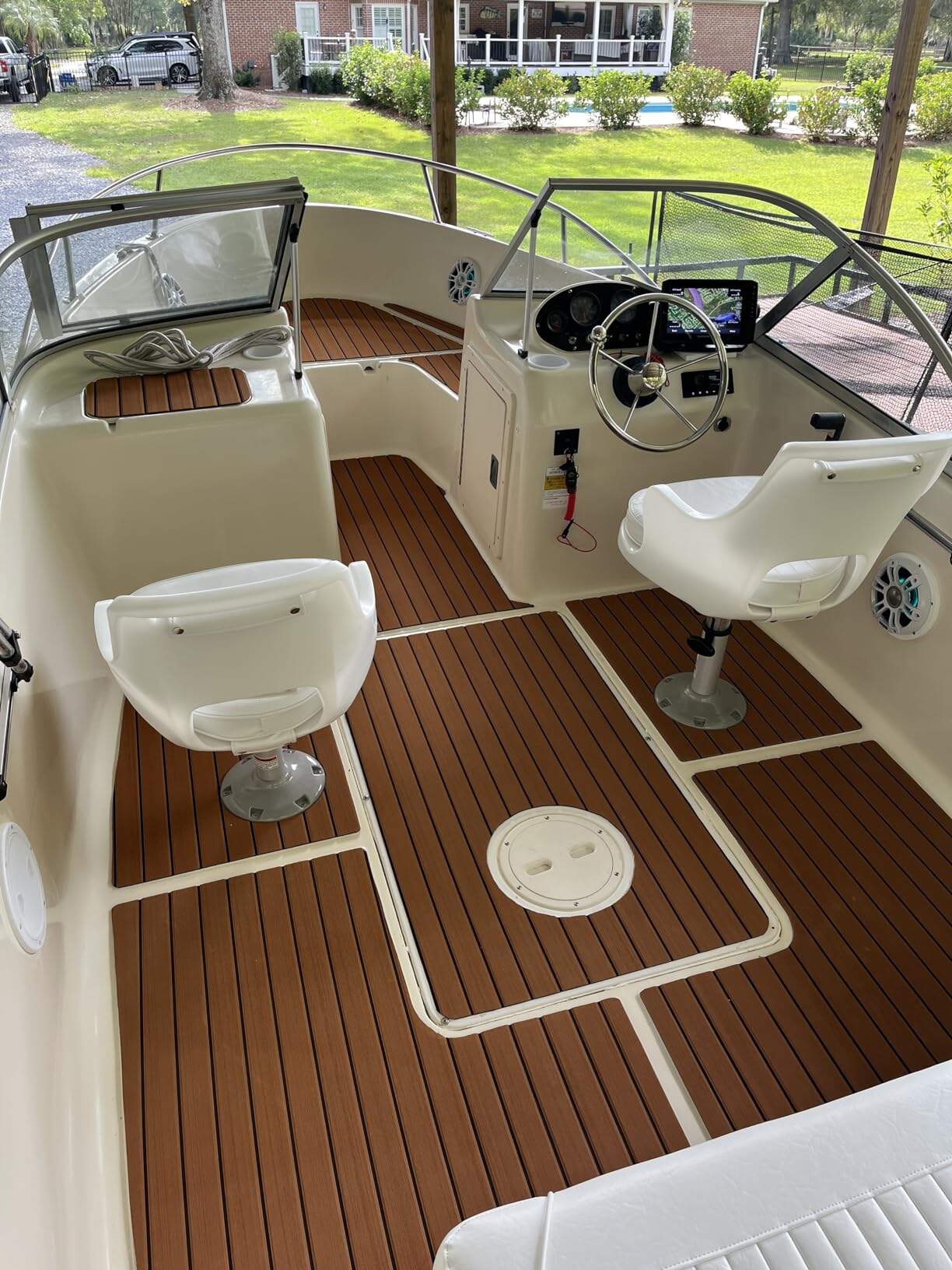
Cutting and Shaping Techniques for Complex Geometries
Advanced Cutting Tools and Equipment
Precision cutting represents a critical phase in boat flooring customization, requiring specialized tools designed for marine-grade materials. Professional-grade utility knives with replaceable blades provide clean, straight cuts for basic shaping, while heated cutting tools enable smooth edges on foam-based products. Electric oscillating tools offer versatility for intricate cuts around fixtures and irregular shapes.
Water-jet cutting technology has revolutionized commercial boat flooring production, enabling precise cuts based on digital templates. This computer-controlled process ensures consistent quality across multiple identical pieces while maintaining tight tolerances for complex shapes. The technology particularly benefits fleet operators who require standardized boat flooring solutions across multiple similar vessels.
Heat Forming and Molding Applications
Controlled heat application allows certain boat flooring materials to conform to three-dimensional shapes that would be impossible to achieve through cutting alone. Professional installers use heat guns and specialized forming tools to gradually shape materials around curved surfaces and compound angles. This technique proves particularly valuable for wrapping boat flooring around raised deck edges and integrated seating areas.
The heat forming process requires careful temperature control to avoid material damage while achieving desired flexibility. Different boat flooring materials respond differently to heat treatment, necessitating material-specific techniques and temperature ranges. Professional installers develop expertise in recognizing optimal forming conditions for various products and applications.
Installation Methods for Irregular Deck Surfaces
Adhesive Systems and Bonding Techniques
Successful boat flooring installation on irregular surfaces requires advanced adhesive systems that maintain strong bonds across varying contours. Marine-grade adhesives must accommodate thermal expansion, UV exposure, and constant moisture while providing permanent attachment to diverse substrate materials. Two-part polyurethane adhesives offer exceptional performance for demanding applications, while pressure-sensitive adhesives simplify installation for DIY projects.
Surface preparation plays a crucial role in adhesive performance, particularly on curved or textured deck surfaces. Professional installers thoroughly clean and degrease surfaces before applying primers that enhance adhesive bonding. This preparation ensures that boat flooring installations maintain their integrity despite the challenging marine environment and dynamic loading conditions.
Mechanical Fastening Solutions
Certain boat flooring applications benefit from mechanical fastening systems that provide removable installation options. Snap-fit systems and specialized marine fasteners enable quick removal for maintenance access while maintaining secure attachment during normal use. These systems prove particularly valuable for racing sailboats where weight optimization and equipment access remain priorities.
Hidden fastening techniques preserve the aesthetic appeal of boat flooring installations while providing robust mechanical attachment. Professional installers route grooves and channels that conceal fastening hardware, creating seamless surfaces that appear fully bonded. This approach combines the reliability of mechanical fastening with the visual appeal of adhesive-only installations.
Maintenance and Longevity Considerations
Cleaning Protocols for Custom Installations
Custom boat flooring installations require specific maintenance protocols that preserve both appearance and performance characteristics. Different materials respond to various cleaning agents and techniques, necessitating tailored maintenance approaches for each installation. Regular cleaning schedules prevent the accumulation of salt, dirt, and marine growth that can compromise both aesthetics and safety.
Professional marine detailing services understand the unique requirements of custom boat flooring and employ specialized equipment and techniques. High-pressure washing, when properly controlled, effectively removes stubborn contaminants without damaging delicate surface textures. Chemical cleaning agents designed for marine applications safely dissolve salt deposits and organic growth while protecting underlying materials.
Repair and Replacement Strategies
The modular nature of many boat flooring systems enables targeted repairs that address localized damage without complete replacement. Professional installers maintain material samples and documentation that facilitate accurate color and texture matching for repair work. Strategic planning during initial installation can incorporate repair-friendly seam locations and access points.
Preventive maintenance programs extend the service life of boat flooring installations while preserving their custom appearance. Regular inspection schedules identify potential problems before they require major repairs, while systematic cleaning and conditioning treatments maintain material properties. These programs prove particularly valuable for commercial vessels where downtime for flooring repairs represents significant operational costs.
FAQ
What factors determine the complexity of boat flooring customization
The complexity of boat flooring customization depends on several key factors including deck geometry, material selection, and installation requirements. Vessels with multiple levels, curved surfaces, and integrated fixtures require more sophisticated cutting and fitting techniques. The choice of materials also impacts complexity, as some products offer greater flexibility for challenging installations while others require specialized handling. Professional assessment considers these factors to develop appropriate customization strategies and accurate project timelines.
How do weather conditions affect boat flooring installation
Weather conditions significantly impact boat flooring installation success, particularly temperature and humidity levels during adhesive curing. Most marine adhesives require specific temperature ranges for optimal bonding, while excessive humidity can interfere with curing processes. Professional installers monitor weather forecasts and may delay installations or use climate-controlled environments to ensure proper conditions. Wind can also affect template accuracy and material handling during outdoor installations.
Can boat flooring be installed over existing deck surfaces
Many boat flooring systems can be successfully installed over existing deck surfaces provided they are properly prepared and structurally sound. The existing surface must be thoroughly cleaned, repaired if necessary, and may require primer application for optimal adhesion. Some installations benefit from surface texturing or mechanical preparation to enhance bonding. However, adding flooring thickness may affect hardware clearances and drainage patterns, requiring careful evaluation before proceeding.
What warranty considerations apply to custom boat flooring installations
Warranty coverage for custom boat flooring installations typically depends on material quality, installation methods, and usage conditions. Professional installations using manufacturer-approved techniques generally qualify for standard material warranties, while DIY installations may have limited coverage. Custom cutting and fitting work may affect warranty terms, particularly if modifications alter material properties. Proper maintenance and documentation help preserve warranty coverage throughout the flooring service life.